
No hand-holding on tools
Platform-agnostic. Real developer tooling and cloud platforms, not one prescribed stack.

Technical course
AI for Builders is hands-on-keyboard time that teaches you common architectures, with real data, common deployment methods, and how to tell what good looks like.
Class dates
October 27 to 30, 2026
Tuesday through Friday · 9:00 AM to 5:00 PM daily
Four consecutive days. Each day ends with a working deliverable, so nothing is left for later.
$999
$1,799
per seat, launch pricing through October 10
What this course is
This course is about learning how AI systems work, well enough to build with them. You leave with a working, deployed AI prototype and a repeatable framework, not a chat transcript.
Who should attend
Why this stands apart
Platform-agnostic. Real developer tooling and cloud platforms, not one prescribed stack.
Model behavior, skills, MCP, fine-tuning against RAG, deployment, and evaluation.
A deployed prototype, presented to a nontechnical stakeholder.
Test and prove a system works, not just ship it and hope.
The agenda
DAY 1 · TUE OCT 27
How these models behave, and how to get predictable, structured work out of them.
DAY 2 · WED OCT 28
The part everyone skips: getting real data in, deciding between fine-tuning and retrieval, and getting the thing off your laptop.
DAY 3 · THU OCT 29
Connecting a model to the systems you already run, and the architecture patterns that hold up once people depend on it.
DAY 4 · FRI OCT 30
Prove it works, then present to someone who does not care how it works.
Your instructors
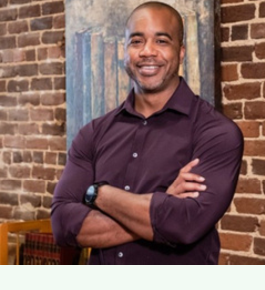
Marcus Blair
Founder, Omega Digital Solutions
Marcus founded Omega to build AI systems that survive contact with a real business. He teaches the architecture sessions and runs the capstone reviews, including the part where your prototype gets questioned.

John McCulley
Founder, Mack2 Strategy
John works with leadership teams on strategy and operating decisions. He teaches the sessions on business value and on presenting technical work to the people who fund it.

John Derrick
Founder, Authentrics AI
John builds AI systems and thinks hard about whether they can be trusted. He teaches data quality, retrieval, and the evaluation work that separates a working system from a good demo.

Ryan McDaniel
Director of Operations, Cuantico
Ryan runs operations at Cuantico and has shipped AI into real processes with real constraints. He teaches deployment, tool calling and integration, and what goes wrong once other people depend on it.
Reserve a seat
Seats are limited to keep the room a real working session, so we talk to everyone before confirming. Send this and one of us replies within two business days with next steps and payment details.
We opened a pre-filled message in your mail app. Send it and one of us replies within two business days with next steps and payment details.
Nothing opened? Write marcus@omegadigital.us directly.